22.9.10


The audio from the TED Summer Debate that took place back in July is now finished and available here.

Four speakers were asked to argue for and against the motion that 'Sustainable Design in the Real World is just an Educator's fantasy....'.

The four speakers were Kieren Jones (RCA recent graduate), Claire Brass (Seed Foundation), Sandy McLennan (CLASS) and Dr Otto von Busch (fashion hacktivist).

Round Table Discussion at the Ethical Fashion Show, Paris


Becky Earley will be contributing to a round table discussion next Monday, 27th September 2010, at the
Ethical Fashion Show in Paris. She will be talking about upcycling textiles and the creative and innovative approaches that the TED designers explored through the Ever & Again project.

"Sustainable management is no longer a marginal phenomenon; it has become the starting point for companies that wish to reposition themselves by fully accepting the responsibilities they carry for the environment and for society...

"Textile innovation is unequivocally compatible with the principles of sustainable management. The round table on innovation aims to prove that the new technologies and the innovative new materials in the field of intelligent textiles that have appeared during the last decade are compatible with the criteria of sustainable management (social and environmental responsibility).”

Dr Isa Hofmann, quoted above, is an expert in the field of new, innovative textile technologies. She will lead the session, and will be joined by:

Florence Bost, textile designer based in Paris

Michael Kininmonth, Lenzing Fibers

Hanne Louise Johannesen, Danish design company Diffus

Francesca Rosella, founder of CuteCircuit

Stijn Ossevort, wearable computing

Karsten Bleymehl, Director Library & Materials Research Material ConneXion Cologne

Alexandre Cappelli, Head of Environment Affairs Department, LVMH

Doris Hartwich, German designer of menswear

and Tzuri Gueta, textiles designer

For those of you who will be in Paris next Monday, the discussion will take place between 2pm and 4pm at -

Cité de la Mode et du Design

34, Quai D’Austerlitz

75013 Paris

TED's D(urability)-Day

D-DAY! Friday 17th September 2010: After being inspired by the Martin Marjiela exhibition in the summer, TED staff decided to put their money where their mouths, or rather hands are, and get eco-creative in the print room at Chelsea. With reference to the beautiful white washed work on show at Somerset House, Kay Politowicz designed a day for TED's practice-based researchers to explore garment durability concepts using print techniques.

Garments: We were asked to dig around the bottom of our wardrobes over the summer, and come into college with clothes and accessories that we no longer wore. Some had stains on them, some were ripped and torn beyond repair, and some were 'freebies' deemed too ugly to wear. Others things that we brought in were too small, too big, too moth eaten, or simply too dull to be loved!

Techniques: We decided to keep it simple - white pigment and opaque binder, silver / gold / white / black foils, flocking paper - and use direct application techniques like hand painting, rollers, and open screens and stencils. The idea was to experiment to find simple, quick, but visually arresting ways to reinvent the clothes.

Outcomes: In the space of a few hours we came up with some really beautiful pieces. The things that caught my eye included the items pictured here...

Frances's unworn grey shirt printed with a stencil with opaque white
Kay's stained orange jumper rollered with glue and then foiled
Clara's plain white summer dress printed with an open screen and then foiled

Watch this space for the next installment - where we explore the ideas further by all remaking a set of identical items from a high street source - the next D-Day will take place in December 2010.

14.9.10


TED member Mel Bowles has some of her lovely digital shibori scarves in the new Lab Craft exhibition, organised by the Crafts Council showing at Tent London next week, 23rd - 26th September.

Lab Craft features 26 makers who combine craft techniques with cutting-edge digital technologies such as rapid prototyping, laser cutting, laser scanning and digital printing. Other designers being shown included Tord Boontje, digital weaver Ismini Samandiou, and one of Mel's recent students
Chae Yong Kim, who works with digital software to develop beautiful, ethereal patterns for wallpapers and fabrics.

For her digital shibori, Mel reinterprates the traditional Shibori techniques using digital media by manipulating complex mathematical graphic geometrics to create light effects, folds and blends.

23.8.10


I was at the Crafts Council's annual conference a few weeks ago, Assemble, where there was an interesting line up of speakers, including Martin Raymond from trend forecasters Future Laboratory, Emily Campbell from the RSA and a wonderful talk from Matthew B Crawford who has written the recent NYT best seller The Case for Working with Your Hands; Why Office Work is Bad for You and Fixing Things Feels Good .

Raymond was there to offer insight into the consumer market for craft, which apparently is doing quite well considering the economic recession. However, he made a rallying cry to makers everywhere that they need to become much more visible with their skills and expertise. He noted that he had recently been to see fashion brand Louis Vuitton, who are planning on having craftspeople working in their shop on Bond Street, making bespoke products. Craft and authenticity have been the words used to describe a new 'luxury' for a while now, but it's not enough anymore for consumers to know something has been made by hand and with great skill - they want to actually see it being made in front of them.

He made a plea to makers to try to win this territory and to see this as a unique opportunity to work with brands and retailers. As Guardian journalist Libby Brooks describes it in her review of the conference, this is where brands are 'appropriating the operative language of craft'. Of course, this is not to everyone's taste, and I sensed a note of dismay from certain makers who would never dream of getting involved with luxury brands, let alone have the marketing skills that would get them noticed.

But, ironically it seems that consumers are actually becoming more inclined to buy craft and less inclined to buy luxury goods and that overall spending on craft appears to be holding up better than spending on luxury goods, art and design. This came from a report that the Craft Council have commissioned which showed that craft is seen as being more 'genuine' and 'personal' than luxury/art/design and that luxury in particular, is starting to have negative connotations such as being 'too expensive' and being too concerned with status.
Hopefully this will help the craft market in benefiting from this strong consumer trend for authenticity and connoisseurship.

16.8.10


We have just uploaded some new podcasts that capture the work of three of our BA graduates from this year, as a 'taster' to the fabulous new content that will be available on our new website which is coming soon!

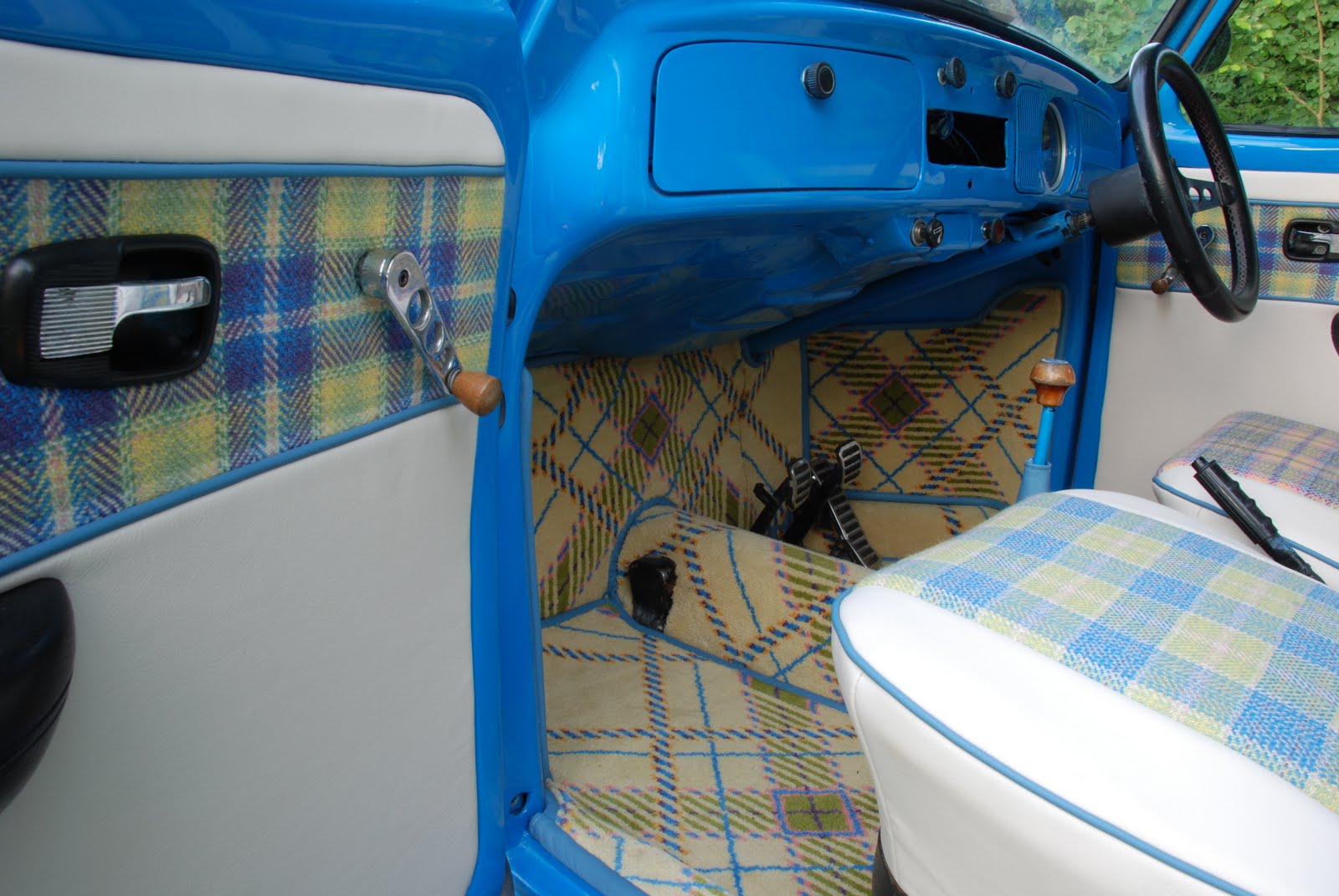
Becky Earley is in conversation with the graduates as they discuss their final year work and research topics. Katherine Redman (images above) talks about designing bespoke woven car interiors for car lovers, Lauren T Franks discusses her explorations of the ethics of materials and fibres, and Bridget Harvey reflects on what 'slow design' means to her and her studio practice.
These three students were chosen as they reflect the rich and diverse approaches to sustainability that we teach here at Chelsea, whether it be through fashion or interior textiles. The students become 'experts' in taking the sustainable design ideas we encourage them to explore and trying them out through their studio practices.

9.8.10

More feedback from our Summer Debate last month:

"The talk was very insightful, particularly the discussions about designers and scientists needing to have a closer relationship and more collaborations. I was also interested in what Otto von Busch said about the increased need for emotion in design - not a revelation, but so relevant as (it seems) being ecologically sound in production will not be enough in the long term.

Kieran Jones's comments about designing for a geographically and physically changing world and not just making it a greener one, was also an I idea I'd like to explore further..." Alison Gough, Stylus Trends Consultancy

Image: Kieren Jones